





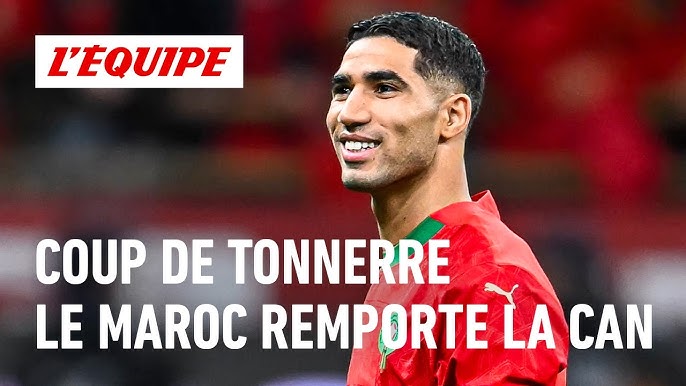
The announcement has caused a shockwave far beyond the African continent. By deciding to strip Senegal of its 2025 AFCON title and award it to Morocco on a technicality, the CAF appeals jury has triggered an avalanche of reactions in international media. Reuters described this decision as a major turnaround after Senegal’s on-field victory, while Associated Press and The Guardian emphasized the historical, controversial, and explosive nature of this verdict, recalling Senegal’s anger and the impending appeal to the CAS.
In foreign press, the tone has often been harsh. Le Parisien, in summarizing the initial international reactions, reported that some media referred to it as a “joke of the century,” a “scandal,” or even a true “earthquake.” The Parisian daily particularly noted that The Athletic described the decision as “astonishing,” while the Spanish press, through Marca and AS, highlighted the global dimension of the controversy. In other words, abroad, Morocco’s championship is not just presented as a new victory, but as the beneficiary of an extremely rare shift in the recent history of African football.
On the French press side, the chosen headlines primarily reflect the astonishment at the brutality of the reversal. TF1 Info opted for a factual yet strong title — “AFCON 2025: CAF Cancels Senegal’s Victory, Morocco Declared Winner” — immediately highlighting the annulment of the initial result and the institutional significance of the decision. Le Monde, for its part, emphasized the break by titling: “Senegal is No Longer AFCON Champion: An Appeals Jury Strips Its Title to Award It to Morocco,” a choice that underscores Senegal’s dispossession as much as Morocco’s new status.
Other French media adopted a more dramatic or legal angle. Le Parisien referred to Senegal’s “defeat on a technicality” in its explanatory article, detailing the circumstances that led to this unprecedented scenario. L’Équipe, in a more procedural tone, quickly focused on Senegal’s response with “After the Cancellation of Its Victory Against Morocco at AFCON, Senegal Will Appeal to the CAS.” Eurosport, finally, relayed the denunciation of a decision deemed “unjust” by the Senegalese federation, emphasizing the legal battle that now looms around this title awarded to Morocco.
What emerges from this French coverage is a generally less passionate treatment than in some foreign media, but still marked by the idea of a sporting earthquake. The French press did not simply announce Morocco as the African champion; it primarily narrated a contested title, born from a game void, a departure from the field, and a strict reading of the regulations. Between surprise, caution, and questioning the solidity of the verdict, French newspapers describe more of a governance crisis in African football than a classic celebration of a continental title.
In the end, the news of Morocco’s championship was received as an extraordinary event. Internationally, many media outlets emphasized the shocking and almost unreal nature of the decision. In France, the headlines sought to frame the shock through law, facts, and upcoming consequences. But everywhere, one idea prevails: this Moroccan title on a technicality is unlike any other and will continue to fuel debates, appeals, and controversies in the coming days.
